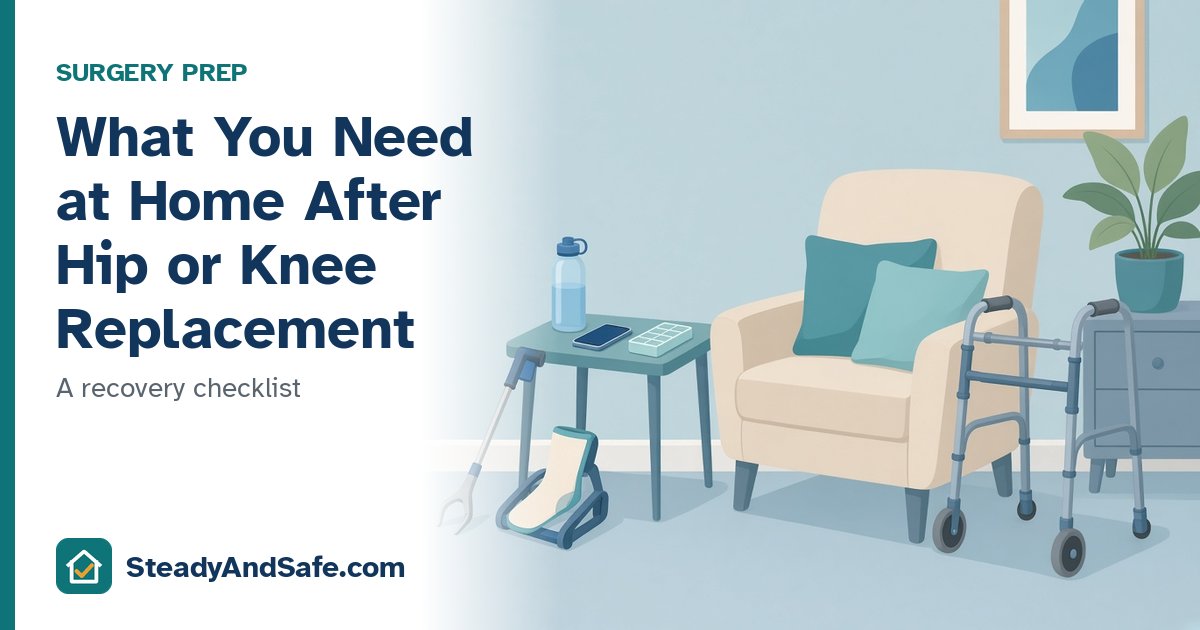
The weeks after a hip or knee replacement are mostly about doing ordinary things differently: getting out of bed, using the toilet, putting on socks, carrying a cup of coffee with a walker in your hands. The surgery happens in the hospital, but most of the recovery happens at home.
The easiest time to set up your home is before surgery, when you can still move furniture, order equipment, and practice. This guide pulls together what MedlinePlus and the American Academy of Orthopaedic Surgeons (AAOS) recommend, organized by room, with products to compare.
The quick list
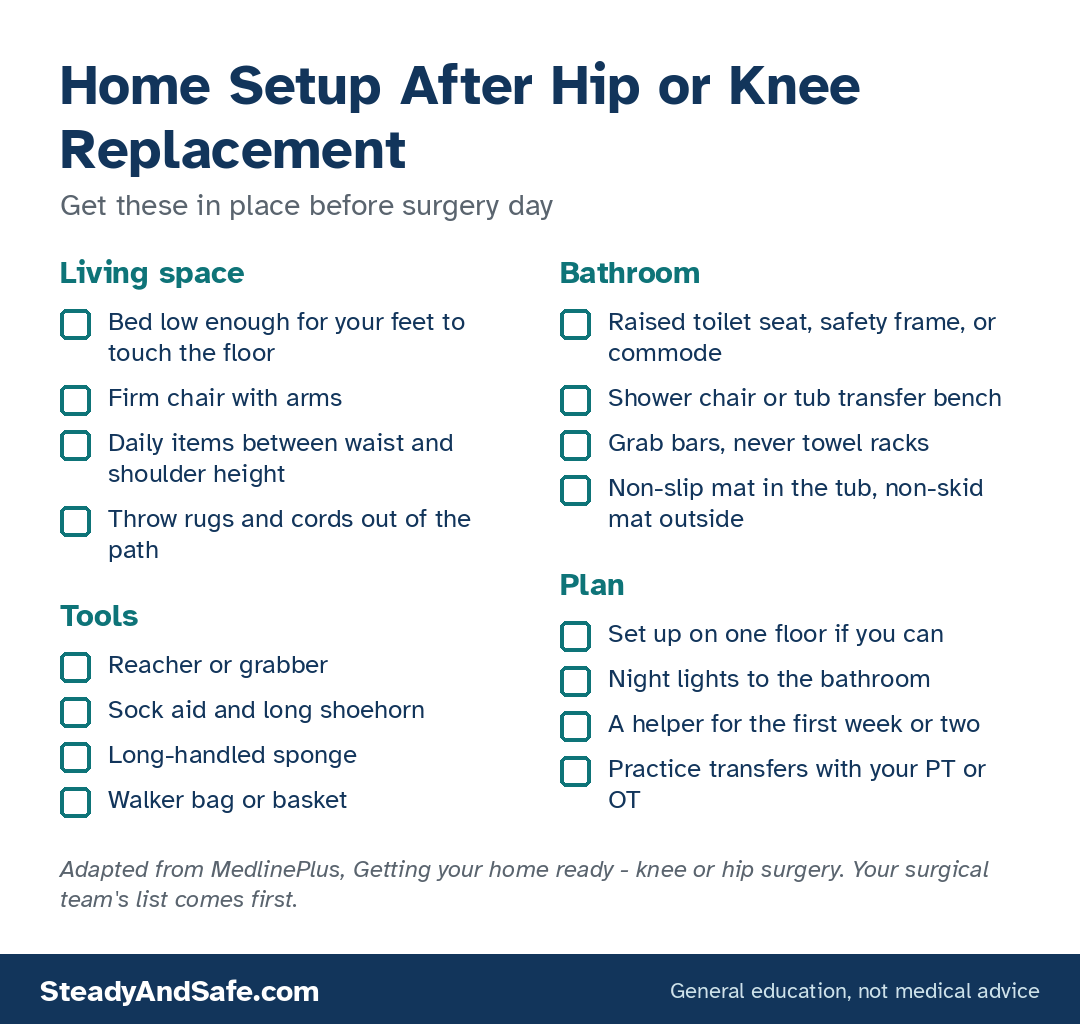
Most people need some combination of these. Your team may add or remove items.
- A walker (and later, a cane), fitted by your physical therapist.
- A raised toilet seat, toilet safety frame, or 3-in-1 commode.
- A shower chair or tub transfer bench.
- Grab bars where you sit, stand, and step in the bathroom.
- Non-slip mats in the tub and outside it.
- A reacher, sock aid, long-handled shoehorn, and long-handled sponge.
- A firm chair with arms that you can get out of without sinking.
- Night lights along the path to the bathroom.
MedlinePlus's list of things to have in place includes a long-handled sponge, a long shoehorn, a cane (or crutches or a walker), a reacher, a sock aid, grab bars, and a raised toilet seat. The AAOS also lists a raised toilet seat, grab bars, and a shower chair.
Set up one floor
MedlinePlus suggests limiting stairs to about once a day at first, and setting up your bed on the first floor if you can. It also recommends having a bathroom or a portable commode on the same floor where you'll spend most of the day.
- Move your bed, or a comfortable alternative, to the main floor if stairs are hard.
- Make sure the bed is low enough that your feet touch the floor when you sit on the edge.
- If the bathroom is on another floor, plan for a commode near where you sleep.
- Clear wide paths through each room you'll use. A walker needs more room than you think.
The living room: your recovery station
You'll spend a lot of time sitting. Choose one firm chair with a back and arms, and avoid soft, low couches you sink into. MedlinePlus recommends firm-backed chairs and keeping the things you use every day between waist and shoulder height, so you don't have to bend or reach high.
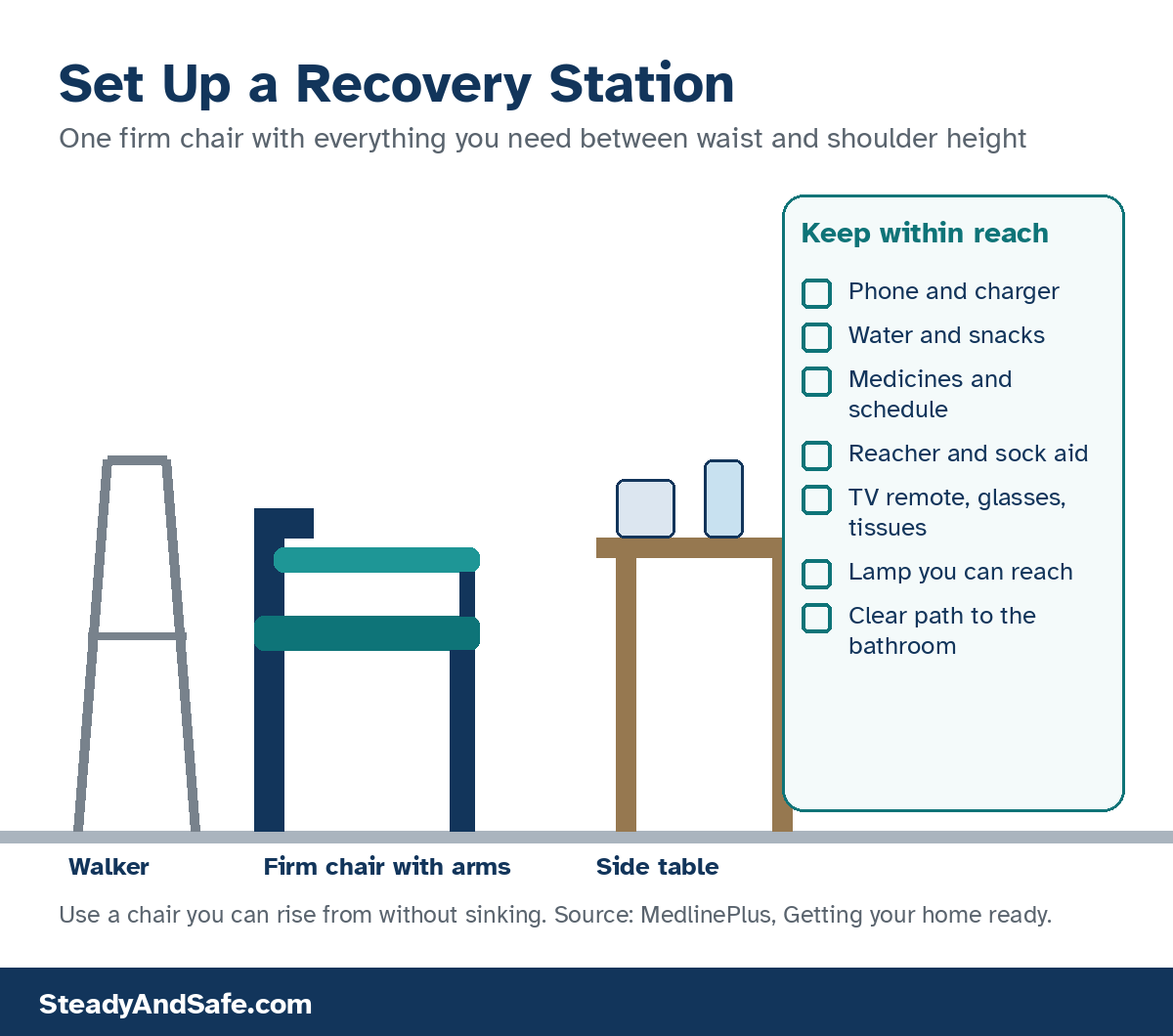
Keep these within reach of your chair: phone and charger, water, medicines and the schedule for taking them, glasses, the TV remote, tissues, and a reacher. The room-by-room home safety checklist has a printable version of this setup.
The bathroom
The bathroom is where your precautions get tested the most. It's also where Medicare coverage is thinnest, so it's worth planning early.
The toilet
A standard toilet is low, which means deep bending at the hip and knee. MedlinePlus says a raised toilet seat, a safety frame, or a commode chair can keep you from bending your knee too much as you sit. Many people use a raised seat for height and a frame (or a seat with built-in arms) for support. My guide to raised toilet seats vs. toilet safety frames compares them in detail.
The tub or shower
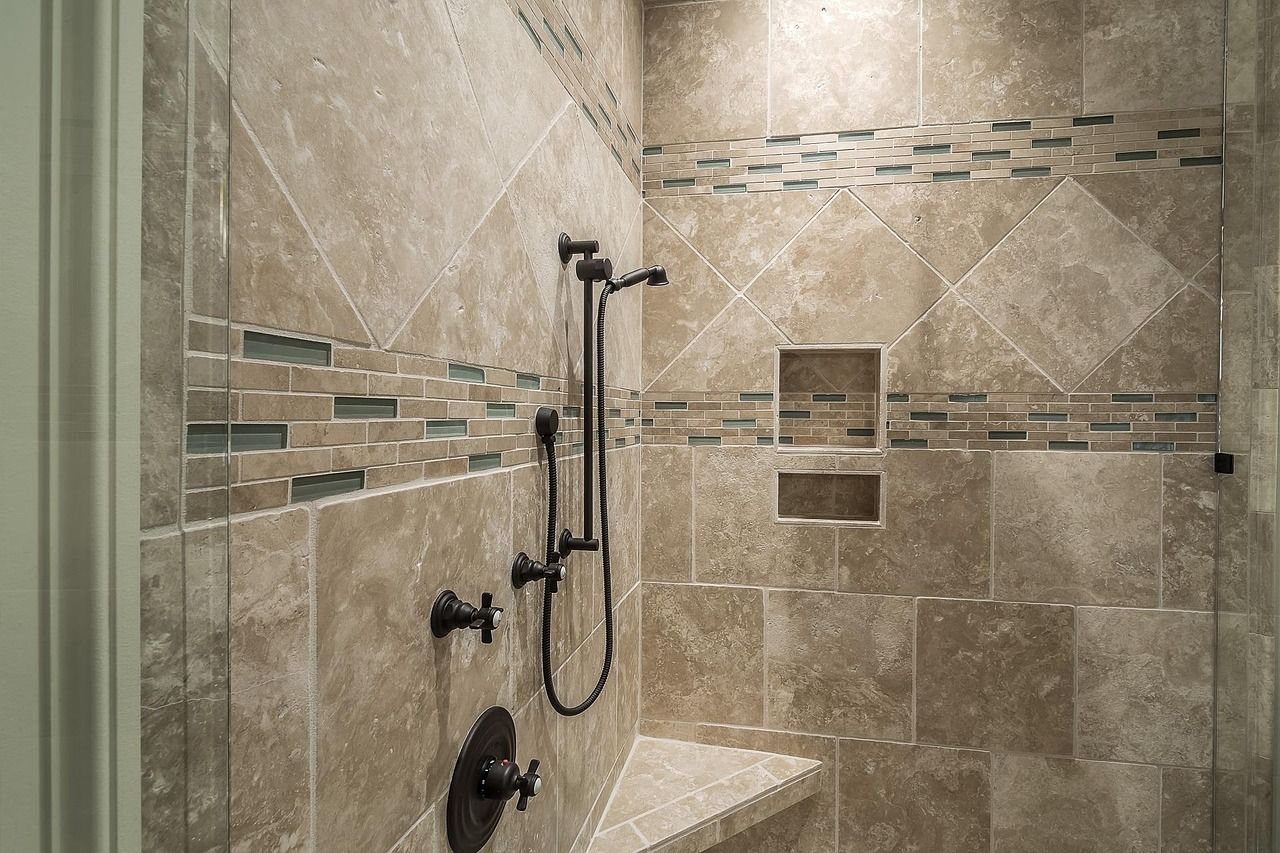
Stepping over a tub wall is hard on a new hip or knee, and after hip replacement it can break your precautions. A tub transfer bench lets you sit outside the tub and slide across. In a walk-in shower, a shower chair may be enough. See Shower Chair vs. Tub Transfer Bench.
MedlinePlus recommends a shower chair with rubber tips, and adds: "Buy a seat without arms if it is placed in a bathtub." Add a handheld shower and a long-handled sponge so you can wash without bending or twisting.
Grab bars and floors
MedlinePlus recommends grab bars mounted vertically or horizontally (not diagonally), and warns that towel racks can't support your weight. It suggests two grab bars: one to help you get in and out of the tub, and one to help you go from sitting to standing. For renters and anyone tempted by suction bars, read Are No-Drill Grab Bars Safe? first.
On the floor, MedlinePlus recommends non-slip suction mats or silicone decals in the tub, a non-skid mat outside it, and keeping the floor dry. My guide to non-slip bath mats and tub strips covers which one fits your tub.
The bedroom and getting dressed
After hip replacement, bending to reach your feet is often off-limits for a while. After knee replacement, it's just hard. A few small tools handle most of it:
- A reacher or grabber for picking things up and pulling up pants.
- A sock aid to put socks on without bending.
- A long-handled shoehorn and slip-on shoes with closed backs.
- A leg lifter, a strap that helps you lift your operated leg into bed.
- A dressing stick for getting clothes over your feet.
Many hospitals sell or loan a hip kit with several of these. Ask your therapist which ones you'll actually use, and have them show you how.
Walkers and getting around
Your physical therapist will usually decide which walker you need and set it to your height before you go home. If you buy your own, bring it to therapy so they can check the fit.
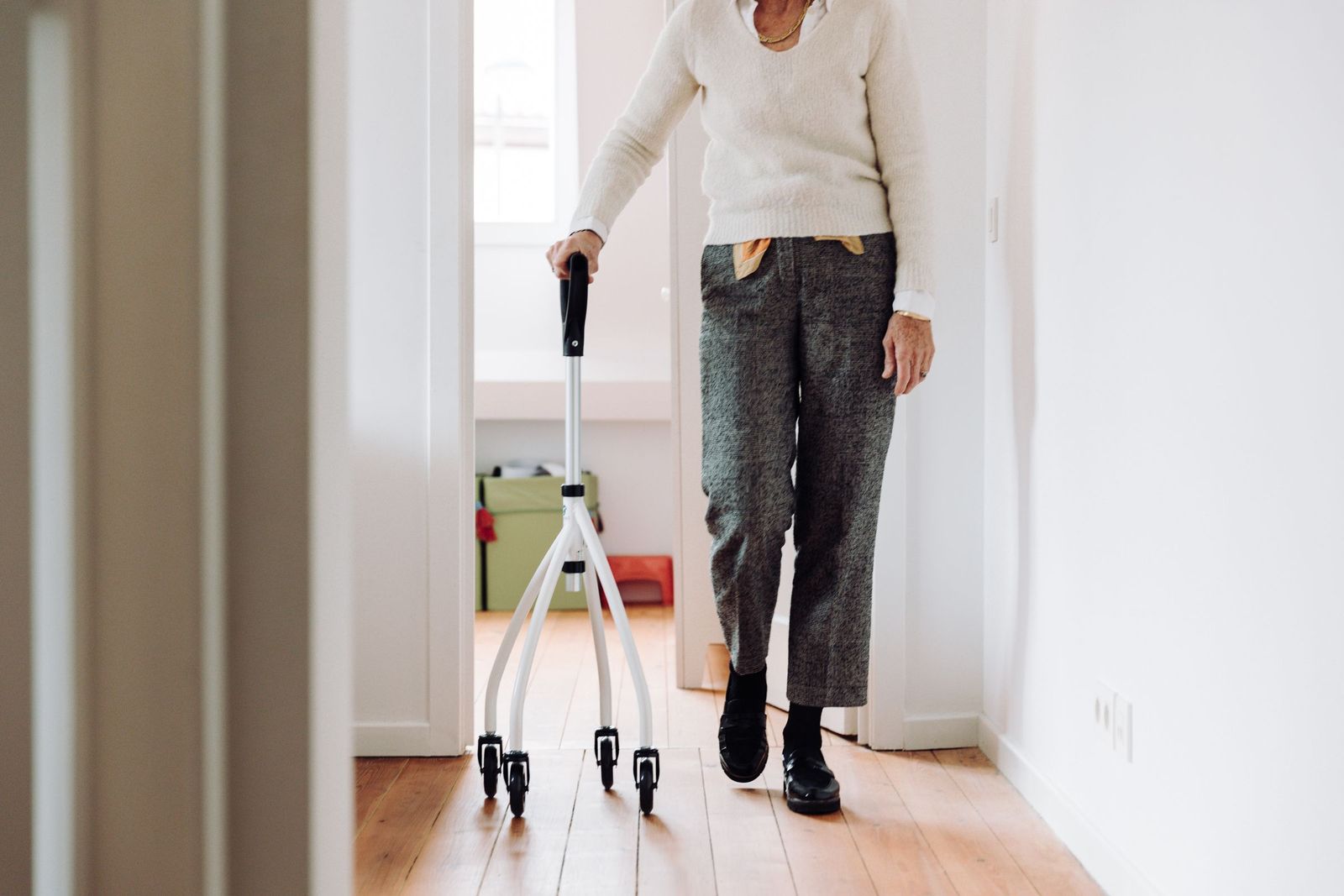
MedlinePlus recommends attaching a bag or basket to your walker so your hands stay on the handles, and not carrying things while you walk. Small changes help, too: remove throw rugs and loose cords, add night lights, and think about pets that might get underfoot.
Line up help
MedlinePlus recommends having someone stay with you, or at least check on you, for the first week or two after you get home. The AAOS also notes that most people need some help for several days to a few weeks. Line up rides to appointments, help with meals and laundry, and someone to handle pets.
If you'll be alone for parts of the day, think about how you'd get help after a fall. Keep a charged phone on you, and read my guide to medical alert systems if you live alone.
Practice before surgery
If you can, set things up a week or two ahead and practice: getting on and off the toilet with the raised seat, sitting down on the tub bench, using the reacher and sock aid. MedlinePlus suggests practicing transfers ahead of time. Many hospitals run a pre-surgery class where a therapist walks you through it.
Products to consider
I used a walker during my own ACL recovery, but the specific picks below come from each maker's published specs, not hands-on testing of each model. Your therapist's recommendations come first, and some items, especially walkers, should be fitted by them.
Recovery kits and dressing aids
Vive Hip and Knee Recovery Bundle.
- Pros: one kit with a leg lifter, a 23-inch shoehorn with a sock remover, a sock assist, a dressing stick, a folding 32-inch reacher, and a 17-inch long-handled loofah brush.
- Cons: you may not need every piece; if your hospital already provides a kit, check for duplicates.
Vive Reacher Grabber (sold on its own).
- Pros: 32 inches long with a rotating claw; useful long after recovery.
- Cons: made for light items (Vive lists about 5 lb), not for heavy lifting.
Vive Sock and Shoe Assist Kit.
- Pros: a sock aid with a 4-inch opening that Vive says works with compression socks, plus a shoe-on helper.
- Cons: sock aids take some practice; ask your therapist to show you the technique.
Walkers
Drive Medical Deluxe Two-Button Folding Walker with 5-inch Wheels.
- Pros: handle height adjusts from 32 to 39 inches; front wheels for smoother movement; folds with two buttons; 350 lb listed capacity; limited lifetime warranty.
- Cons: your PT may want a different style for your stage of recovery, so ask before you buy.
Vive Folding Walker.
- Pros: lightweight aluminum frame under 6 pounds; fits users about 5 feet 1 inch to 6 feet 6 inches tall; folds with two buttons; comes with an attachable walker bag.
- Cons: lower listed weight capacity (250 lb) than the Drive walker.
Bathroom and toilet
See the product picks in my guides to raised toilet seats and safety frames, shower chairs and transfer benches, grab bars, and bath mats.
Night lights
GE LED Night Light, Contour Dynamic Motion: a plug-in, dusk-to-dawn night light that brightens with movement. Put one by the bed, in the hall, and in the bathroom.
Does Medicare pay?
Partly. Under Medicare's coverage rules for durable medical equipment, walkers can be covered when your doctor orders them and you meet the criteria. Medicare's national coverage list (CMS NCD 280.1) covers commodes only in limited cases, such as when you're confined to your bed or room, and denies raised toilet seats, bathtub seats, and grab bars. Some Medicare Advantage plans offer extra benefits. Call your plan, and ask your hospital about loan closets for short-term equipment.
The bottom line
Set up one floor, make the toilet and tub easier, keep everyday things within reach, and line up help for the first week or two. Do it before surgery, practice once, and follow your team's precautions over any list, including this one.
Questions people ask
What equipment do I need after hip replacement?
Most lists include a walker, a raised toilet seat, a shower chair or tub transfer bench, grab bars, non-slip mats, and dressing aids like a reacher and sock aid. Your surgical team's list comes first.
Is it different after knee replacement?
The list is similar. After knee replacement, the main goal is limiting deep knee bending while you heal, so a raised toilet seat and a higher chair help.
When should I set up my home?
Before surgery, ideally a week or two ahead, so you have time to order equipment and practice.
How long will I need this equipment?
It varies. Some items, like a raised toilet seat or reacher, are often used for several weeks. Your surgeon and therapist will tell you when you can stop using them.
Do I need someone with me at home?
MedlinePlus recommends having someone with you for the first week or two. If that's not possible, ask your team about home health services.
Will insurance pay for a walker?
Medicare can cover a walker when ordered by your doctor and you meet its criteria. Call your plan for details.
Read next
Sources
- MedlinePlus getting your home ready
- MedlinePlus bathroom safety
- AAOS getting ready for joint replacement
- AAOS activities after hip replacement
- VA hip safety
- Medicare DME coverage
- CMS NCD 280.1
- CDC fall prevention
Product details come from each maker's product page, checked October 2026.