Most falls at home don't happen because of one big hazard. They happen because of small ones: a rug that curls, a dark trip to the bathroom at 2 a.m., a step stool that's really a kitchen chair. The CDC reports that more than one in four adults age 65 and older falls each year, and falling once doubles the chance of falling again.
This checklist pulls together guidance from the CDC's STEADI Check for Safety brochure, the National Institute on Aging's room-by-room guide, MedlinePlus, and the American Academy of Orthopaedic Surgeons (AAOS). Use it for your own home, a parent's home, or to get ready for surgery.
How to use this checklist
Walk through the home room by room with the checklist in hand, ideally with the person who lives there. Fix the easy things the same day. Make a list of anything that needs a handyman.
There are two ways to use it:
- Aging in place: go through the whole home once, then recheck every year or whenever health or mobility changes. NIA notes that needs change over time, so the home should too.
- Before surgery: start about two weeks ahead so there's time to order equipment and rearrange. Pay special attention to the "Coming home after surgery" section.
Throughout the home
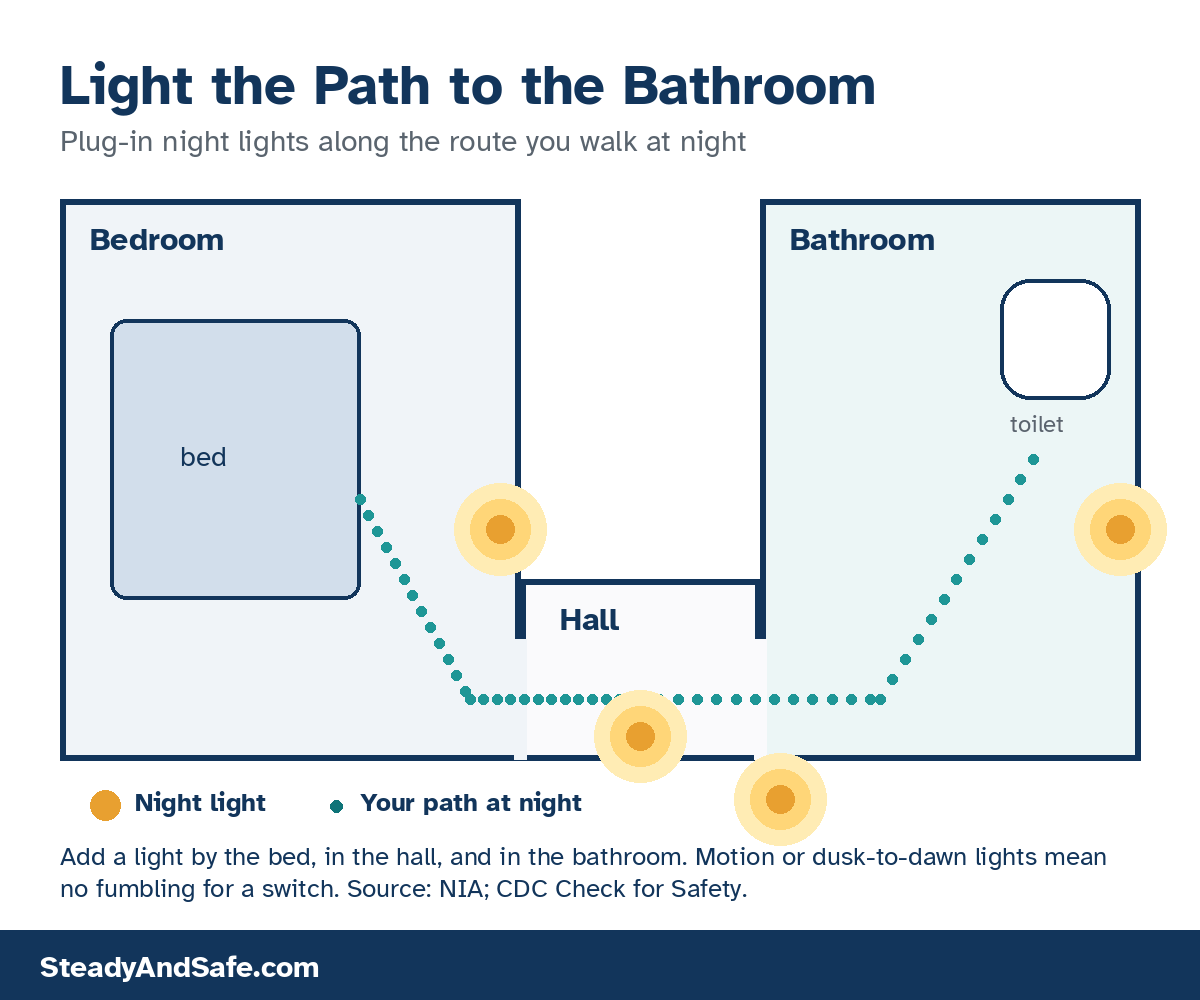
A plug-in night light that turns on at dusk, or one that brightens when it senses motion, means no fumbling for a switch. One example is the GE LED Night Light, Contour Dynamic Motion, which is dusk-to-dawn and brightens with movement.
Entry and outdoors
Stairs
Bathroom
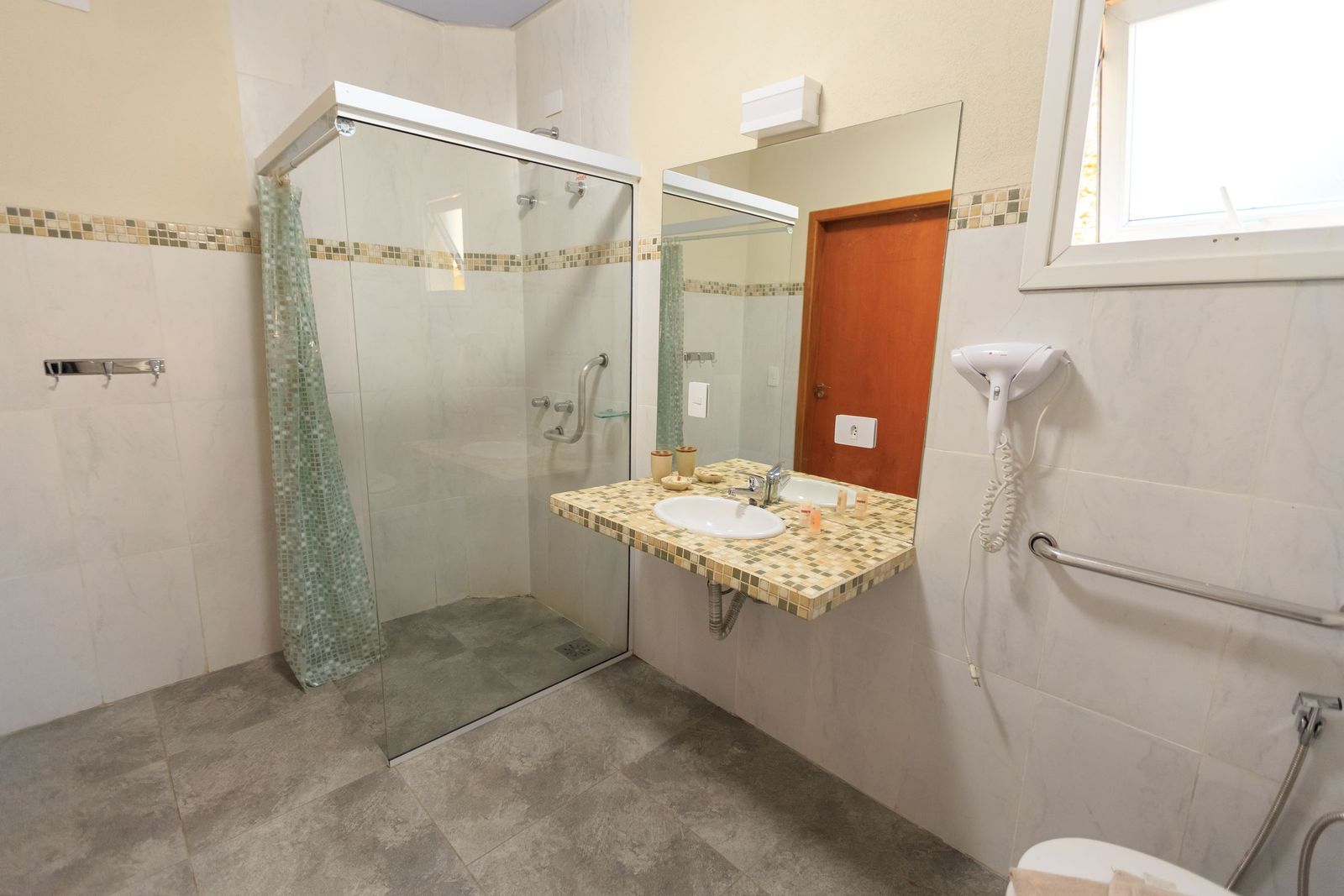
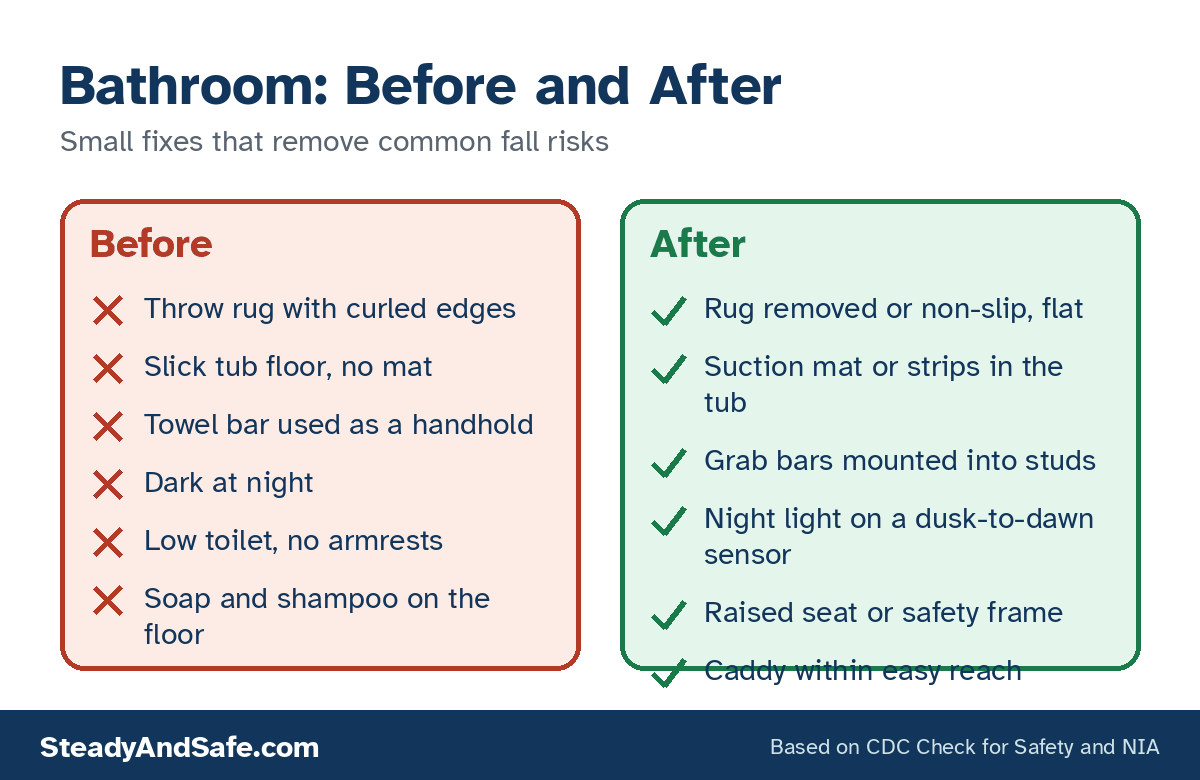
For more detail on the bathroom, see Are No-Drill Grab Bars Safe?, Non-Slip Bath Mats and Tub Strips, and Raised Toilet Seat vs. Toilet Safety Frame.
Bedroom
Kitchen
Coming home after surgery
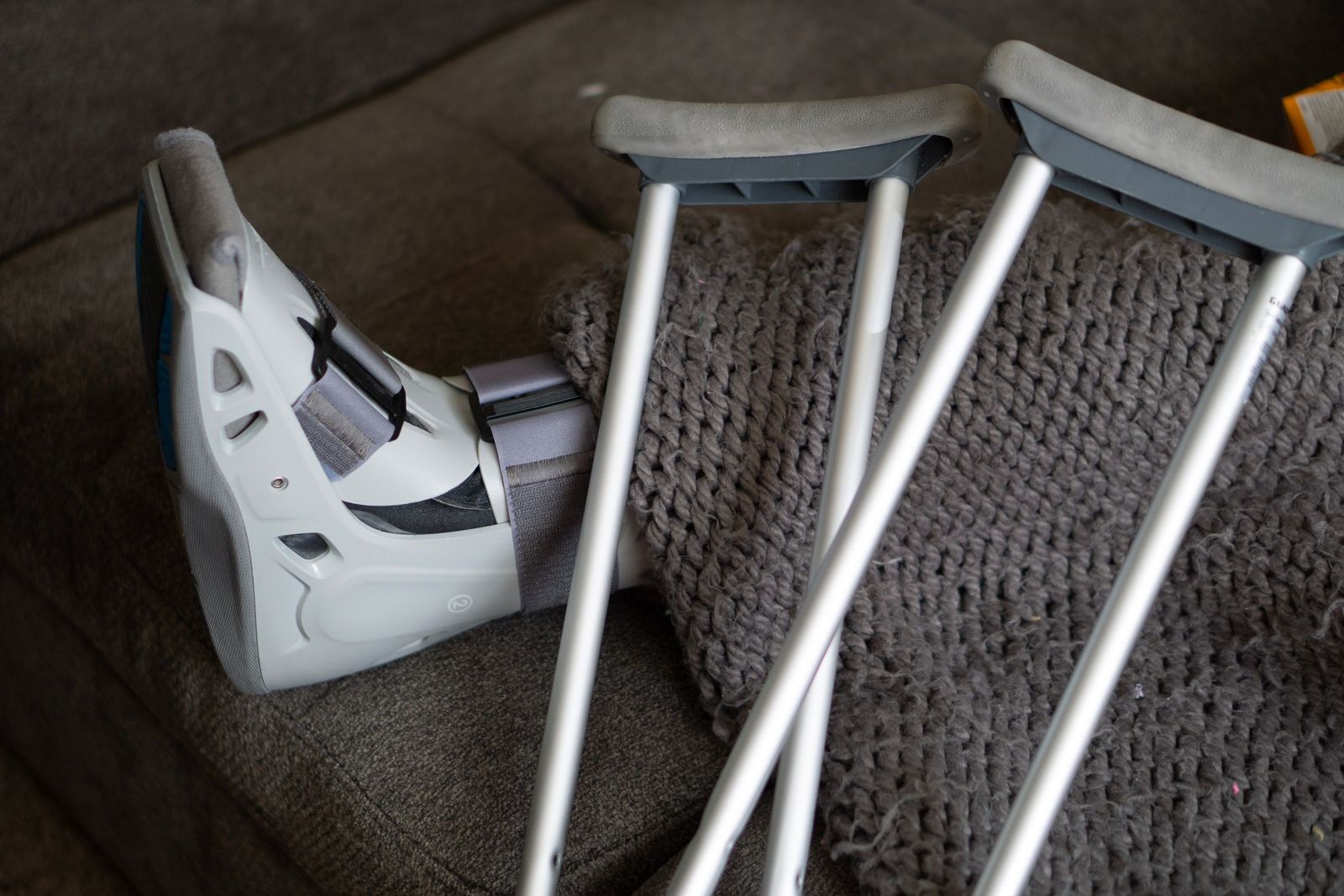
Hip, knee, and back surgery change what's safe for a while. The AAOS notes that you'll likely need help at home for several days to a few weeks. Set these up before you go in.

For a full shopping list, see What You Need at Home After Hip or Knee Replacement.
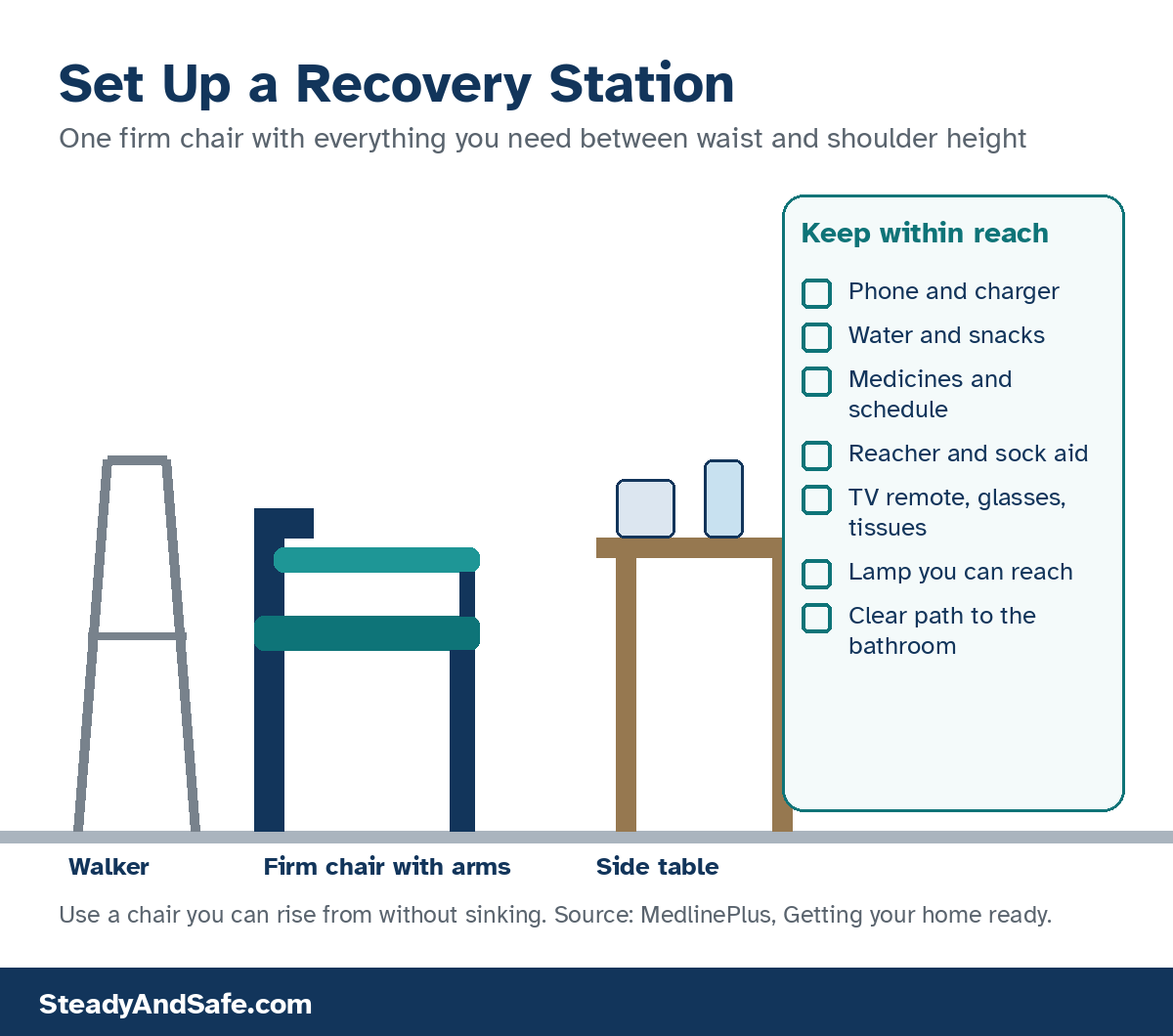
Set up a recovery center
Live on one floor for now
Bathroom setup
Daily-living aids
Pets and carrying things
Beyond the house
A safe home is half the picture. The CDC also recommends:
- Ask a doctor or pharmacist to review your medicines. Some can cause dizziness or drowsiness.
- Get your vision checked once a year, and update glasses as needed.
- Do strength and balance exercises. Ask about programs like tai chi, or a referral to a physical therapist.
- Talk to your doctor about your fall risk, especially if you've fallen or feel unsteady.
A medical alert for people who live alone
If you or your parent lives alone, or will be recovering alone part of the day, a medical alert device can call for help after a fall. The NIA lists emergency response systems as one way to prepare for a fall. Decide whether you need coverage only at home or away from home too, whether you want optional fall detection (it can miss falls, so the button still matters), and what the fees and contract terms are. Providers to compare include Alert1, with in-home and on-the-go systems, and LifeFone, with landline, cellular, and mobile options. My guide to medical alert systems walks through the choice.
Download the printable
Get the free two-page version of this checklist to print and carry room to room. It includes every item above with checkboxes and a short to-do list.
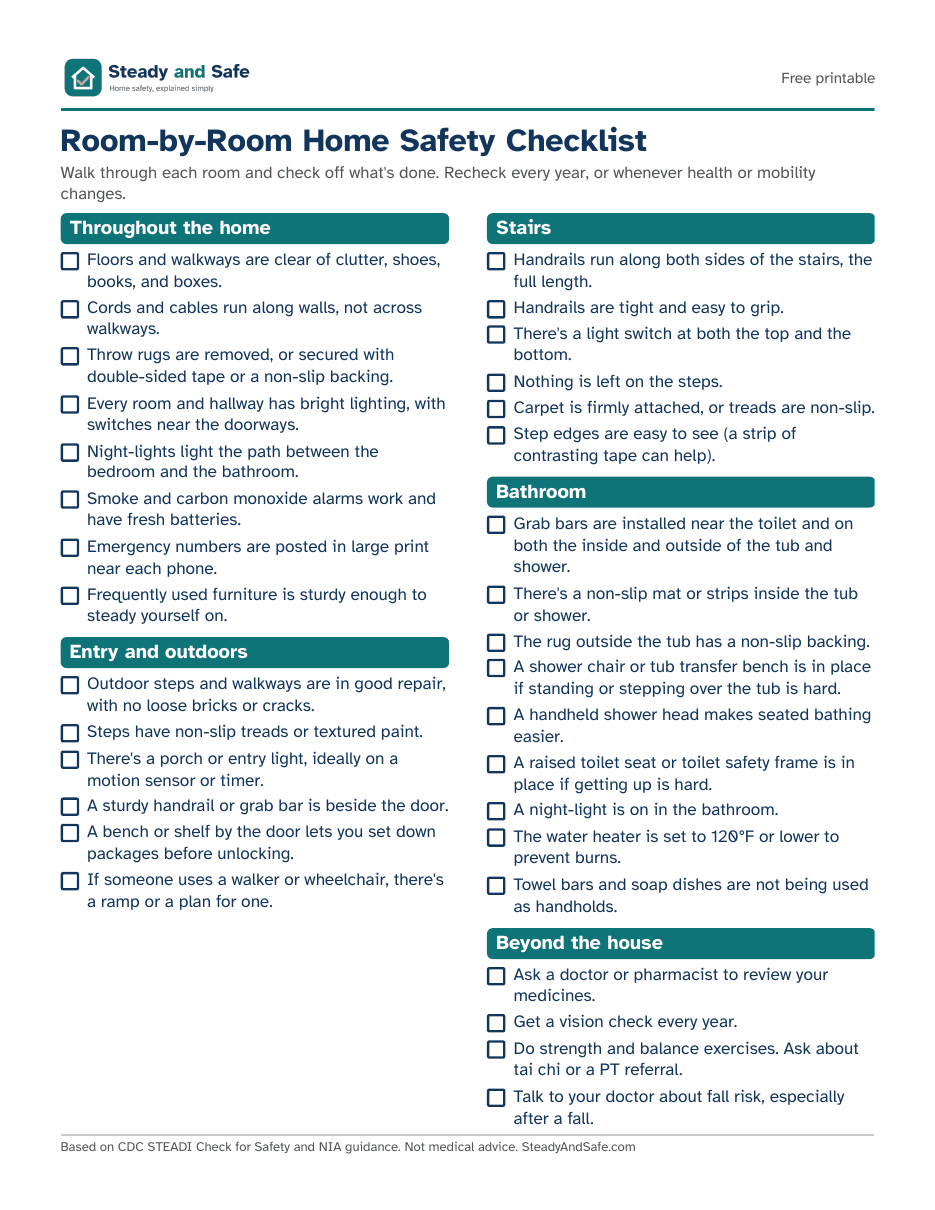
Free, two pages, no sign-up. Print it and carry it room to room. It has every item on this page with checkboxes, plus a short to-do list.
PDF, about 105 KB. It has no links, so it prints cleanly.
More checklists worth a look
- CDC STEADI: Check for Safety
- NIA home safety checklist worksheet
- NIA: Preventing falls at home, room by room
- AARP and NAHB also publish aging-in-place checklists.
The bottom line
You don't have to fix everything in one weekend. Start with lighting, rugs, and bathroom grab bars, since those are the fixes the CDC and NIA mention again and again. Then work through the rest, and recheck whenever health or mobility changes.
Questions people ask
Is there a printable home safety checklist for seniors?
Yes. You can download the free two-page PDF on this page. The CDC's Check for Safety brochure and NIA's worksheet are also free.
Does the CDC have a home safety checklist?
Yes. Its STEADI program publishes Check for Safety, a room-by-room brochure for older adults and families.
How do I prepare my home for hip replacement surgery?
Set up a recovery center, plan to live on one floor, add a raised toilet seat, shower seat, and grab bars, and get a reacher and sock aid. AAOS's getting ready guide has a full list. Ask your surgeon's team about your specific precautions.
How do I prepare my home for knee surgery?
Much the same: clear walker-wide paths, remove rugs, set up a recovery chair with arms, and add bathroom aids. See MedlinePlus: Getting your home ready.
What's on an aging in place checklist?
Lighting, clear paths, secured rugs, handrails on both sides of stairs, grab bars in the bathroom, reachable storage, and a plan for getting help. This page covers all of them.
What equipment do I need at home after hip replacement?
Commonly a walker or crutches, a raised toilet seat, a shower chair or tub transfer bench, a reacher, a sock aid, a long-handled sponge, and a long-handled shoehorn. Your hospital may send you home with some of these.