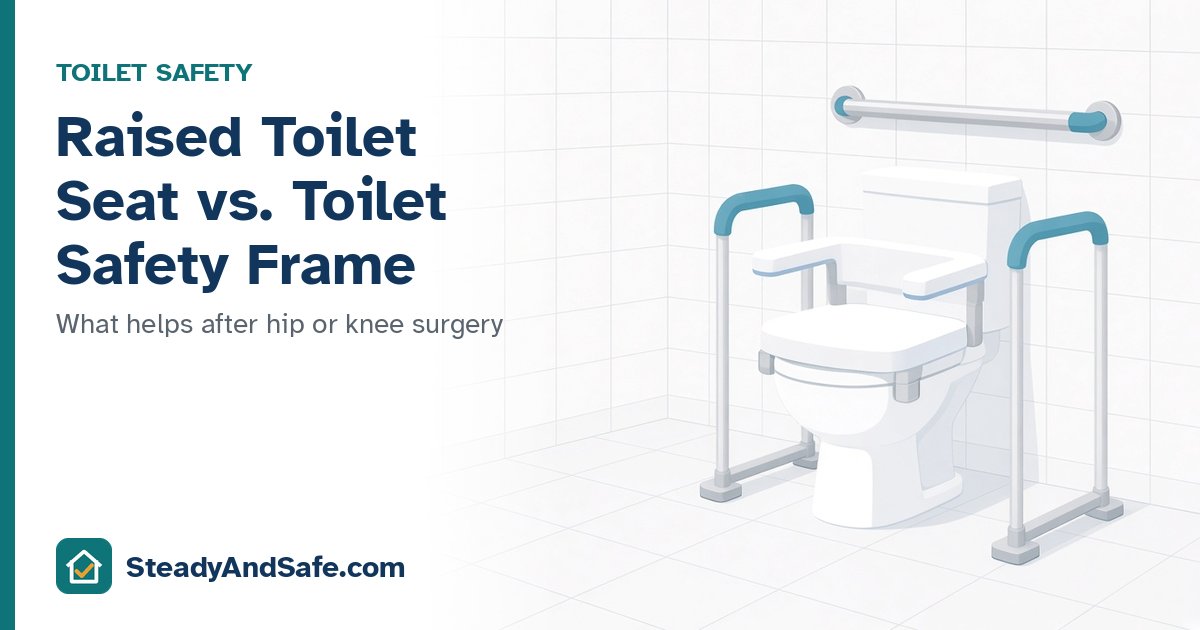
The toilet is one of the hardest places in the house to sit down and stand up. It's low, there's usually nothing sturdy to hold, and you use it many times a day, including half-asleep at night. After a hip or knee replacement, it's also one of the first places your movement precautions get tested.
Two pieces of equipment solve most of the problem: a raised toilet seat and a toilet safety frame. They do different jobs, and plenty of people end up using both. This guide explains the difference, who each one suits, what to measure, and which products are worth comparing.
The quick answer
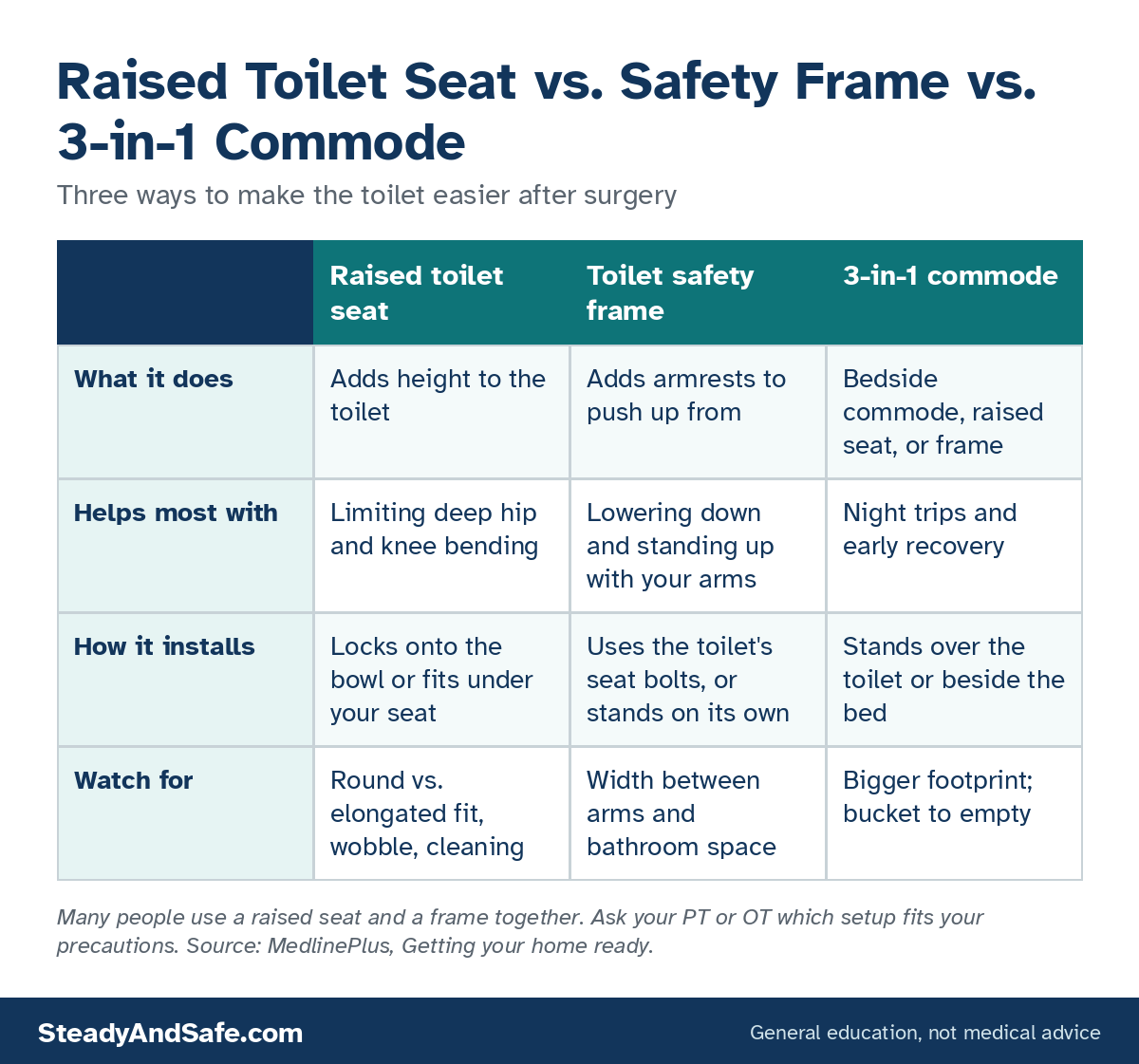
- Choose a raised toilet seat if the main problem is how low the toilet is. It adds height, so you don't bend your hips and knees as far when you sit and stand.
- Choose a toilet safety frame if the height is fine but you need something to push up from and lower yourself with. It adds armrests on both sides.
- Use both if you need less bending and arm support, which is common after hip or knee replacement. Many raised seats come with arms built in.
- Consider a 3-in-1 commode if you need a toilet by the bed in early recovery. Most can also stand over your toilet as a raised seat with arms.
MedlinePlus, the National Library of Medicine's health site, lists a raised toilet seat among the things to have in place before knee or hip surgery. It says a raised seat, a safety frame, or a commode chair can keep you from bending your knee too much as you sit down. Your surgical team may have its own list, and theirs comes first.
What's the difference?
Raised toilet seat
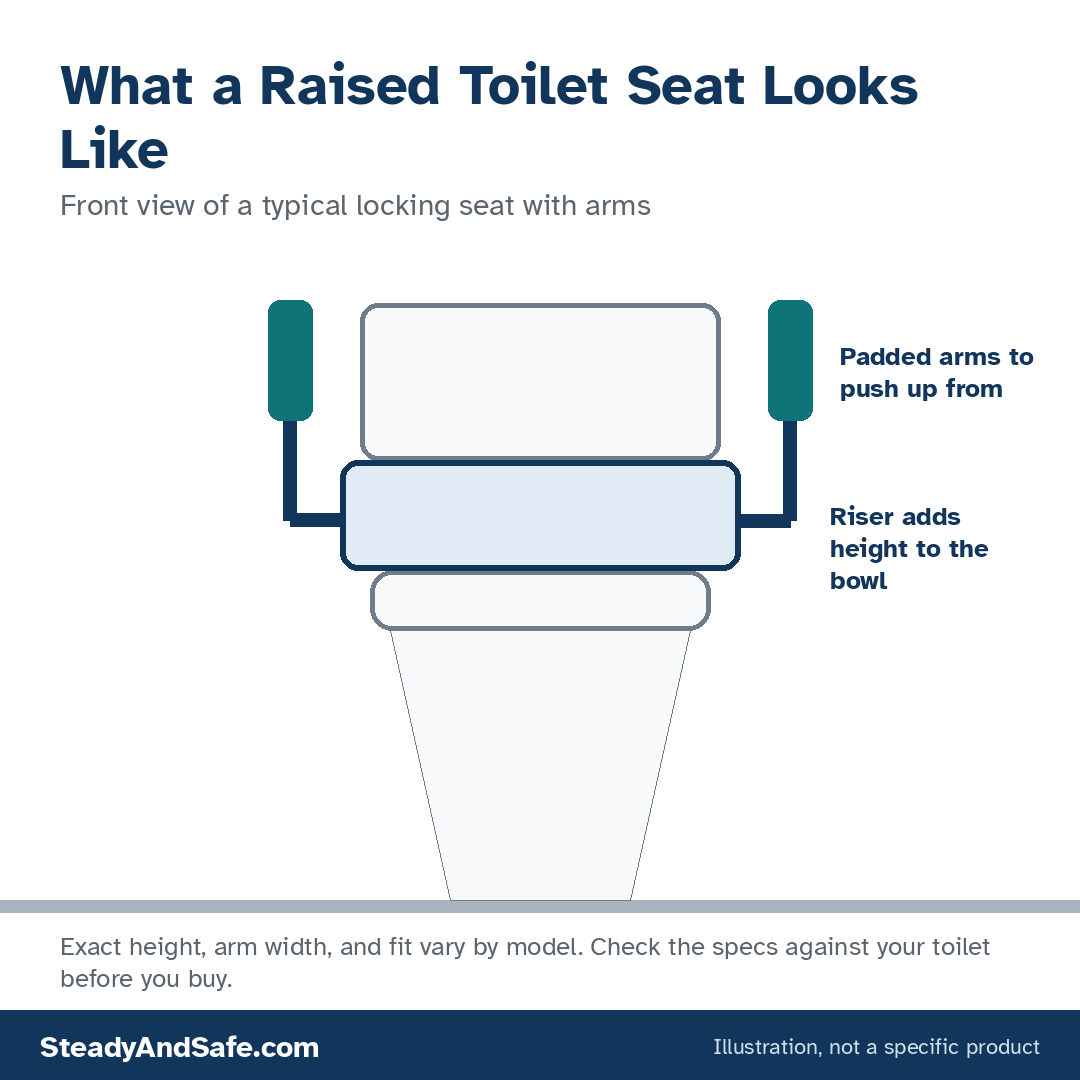
A raised toilet seat is a thick plastic seat that sits on top of the toilet bowl and adds several inches of height. There are three common styles:
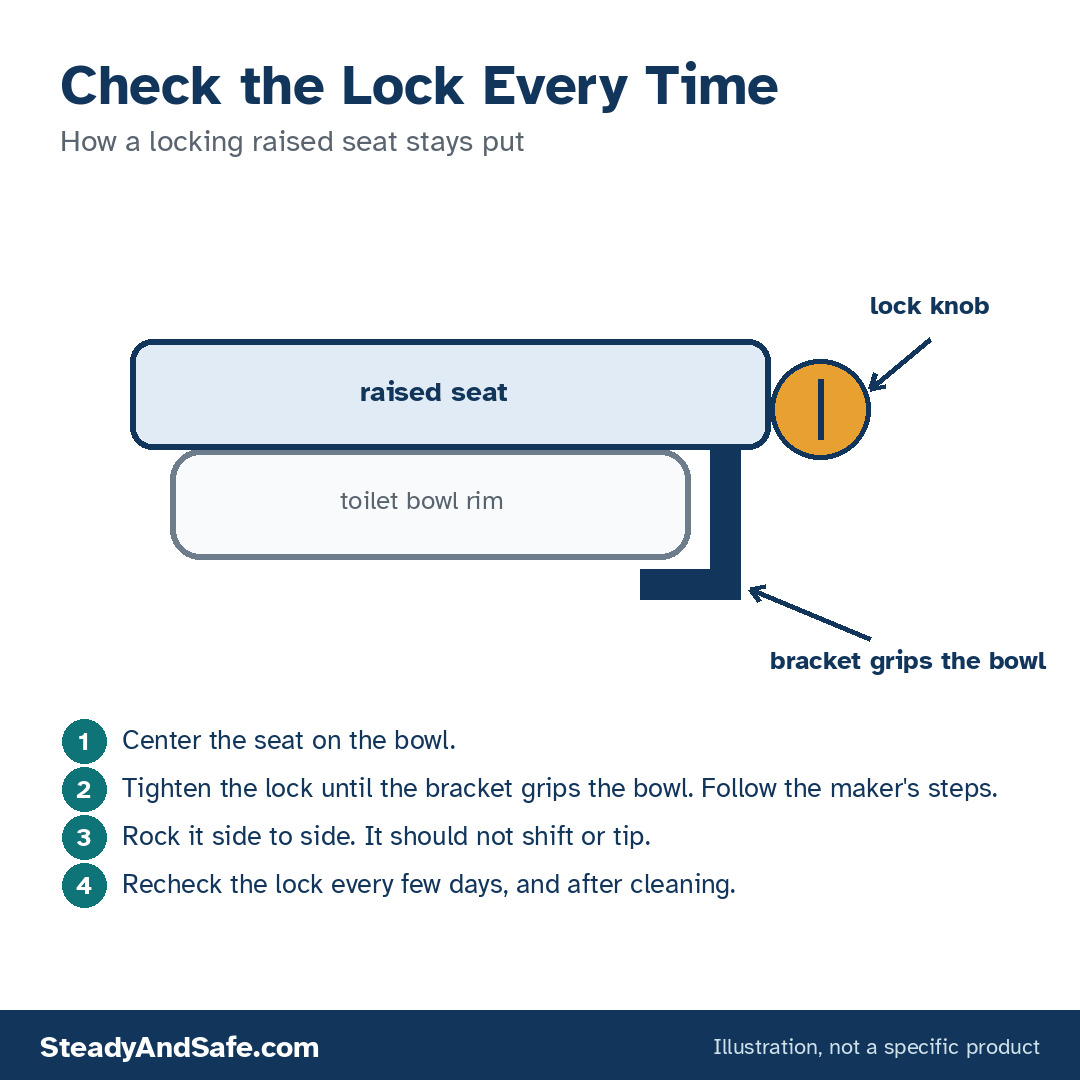
- Locking seats sit on the bowl and lock in place with a bracket that grips the bowl. You remove your regular seat first.
- Seat risers go under your existing seat and lid, held by the seat's own bolts. They look more like a normal toilet and are often lower-profile.
- Seats with arms add padded armrests, which gives you some of what a safety frame does.
Toilet safety frame
A toilet safety frame is a metal frame with two armrests, one on each side of the toilet. Some attach to the toilet using the bolts that hold your seat on. Others are freestanding with four legs. The frame doesn't change the height of the seat. It gives you something solid to hold while you lower down and push back up.
3-in-1 commode
A 3-in-1 commode is a chair-height frame with a seat, armrests, and a removable bucket. It can be used three ways: as a bedside commode, as a raised seat over your toilet (with the bucket removed), or as a safety frame. It's useful in the first days after surgery, when getting to the bathroom at night is hard.
Why the extra height matters
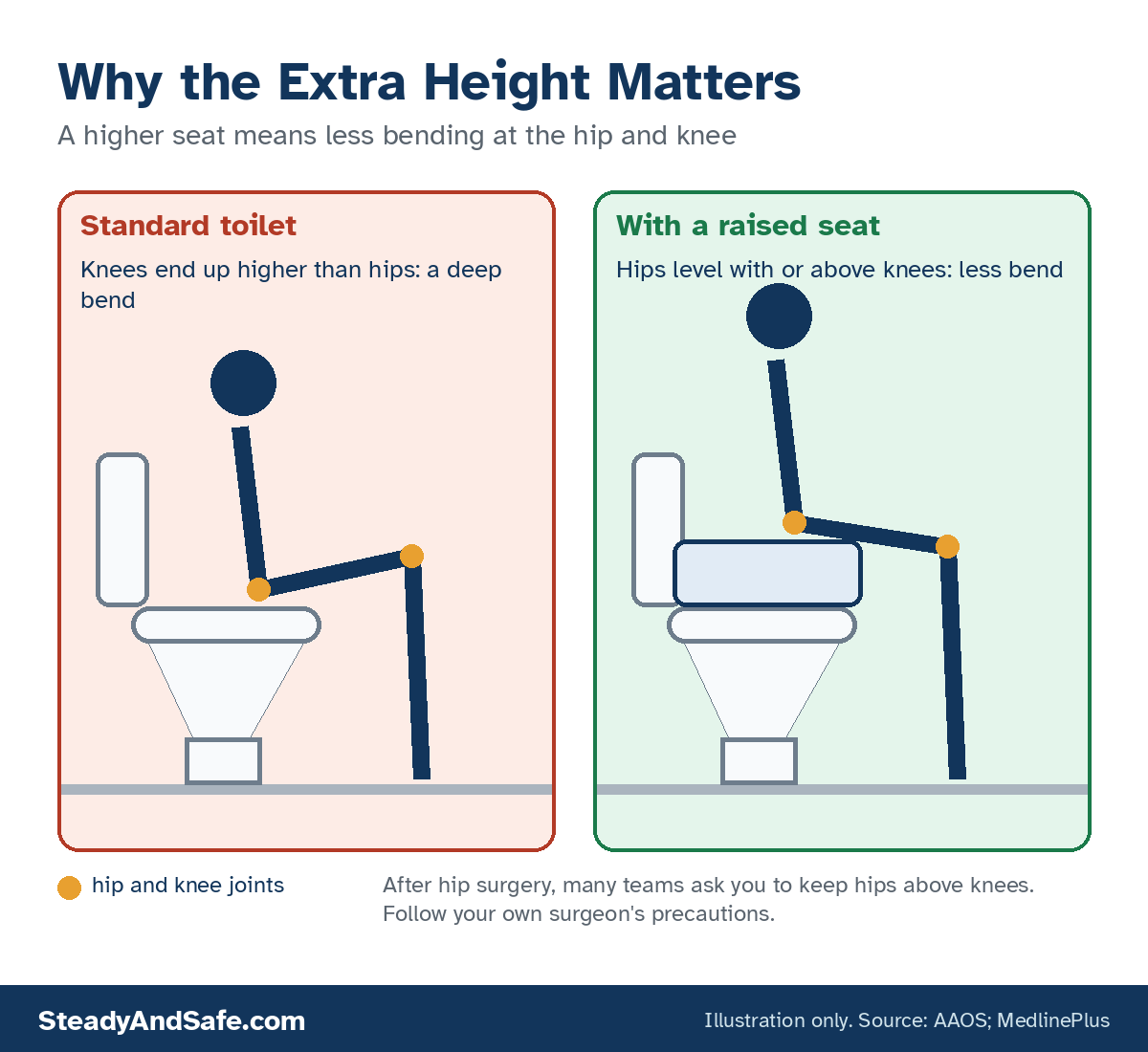
When you sit on a standard toilet, your hips and knees bend deeply, and your knees often end up higher than your hips. That's hard on a new knee, and after hip replacement it can break your precautions.
Common hip precautions, as described by the VA's Veterans Health Library, include not bending your hip past 90 degrees, not crossing your legs, and not turning your operated leg inward. The exact rules depend on your surgeon and the surgical approach. A raised seat lifts you so your hips stay level with or above your knees, which keeps the bend smaller.
After knee replacement, the goal is usually to limit deep knee bending while you heal. A higher seat helps here too. The American Academy of Orthopaedic Surgeons (AAOS) lists a raised toilet seat among the things to have at home before joint replacement.
Which one fits your situation?
After hip replacement
Most people do best with a raised seat, and many also want arms. Either buy a raised seat with arms, or pair a raised seat with a safety frame. Ask your therapist how high the seat should be for you. They may want a specific height based on your height and precautions.
After knee replacement
A raised seat limits how far the knee bends. Arms help you take weight off the leg as you stand. Practice keeping the operated leg out in front of you as you sit, if your therapist teaches it that way.
An older adult with weak legs or balance problems
If height isn't the issue but standing up is, a safety frame is often enough. If the toilet is low and standing is hard, use both.
A caregiver helping a parent
A frame gives your parent something to hold so you aren't the only support. If your parent needs a lot of help, ask their doctor for an OT referral. MedlinePlus suggests asking a provider about a home visit from a therapist, who can check the bathroom and teach safe transfers.
A small bathroom
Measure before you buy. Freestanding frames and commodes take more floor space than a seat riser or a frame that bolts to the toilet.
Measure before you buy
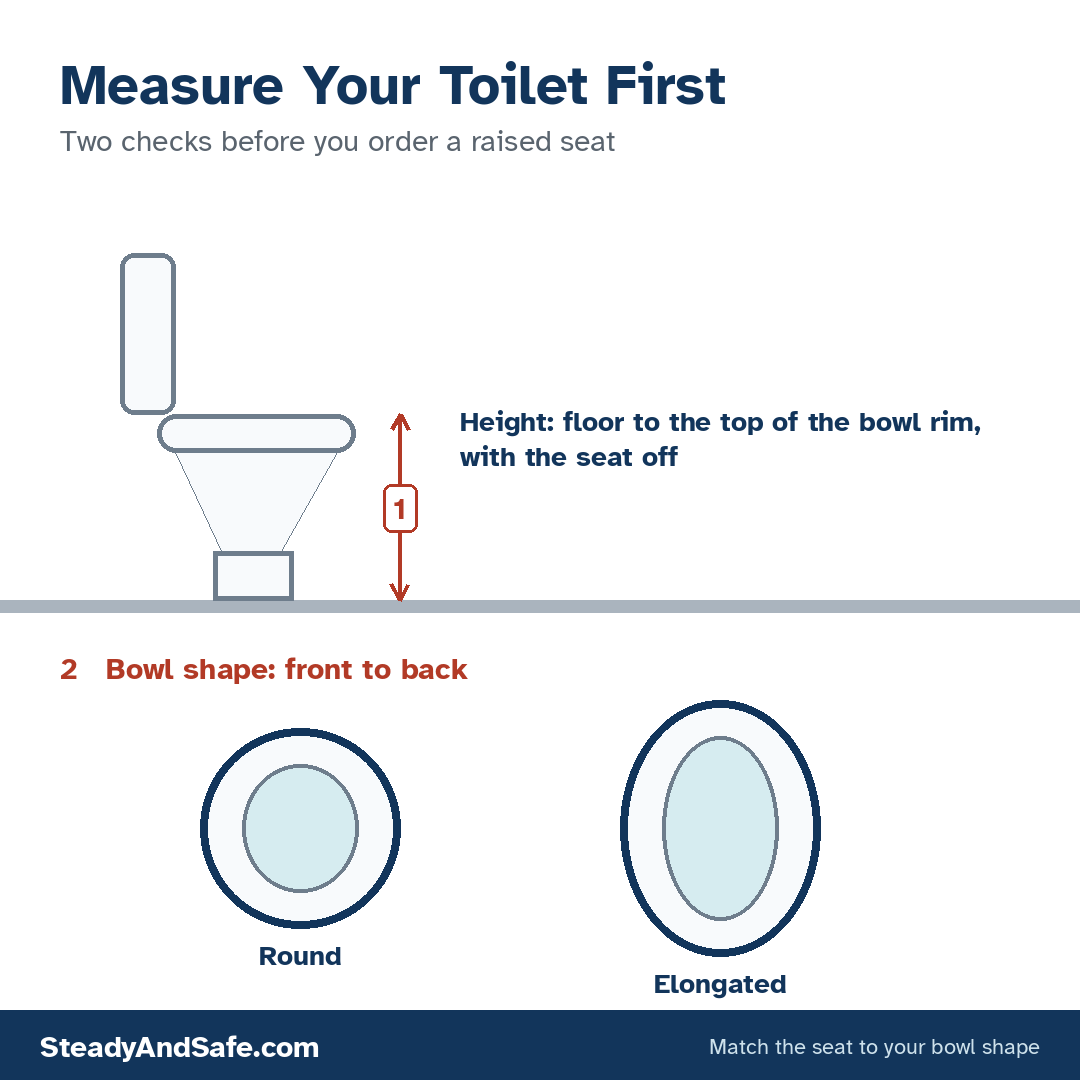
A raised seat that doesn't fit your bowl will shift, and a shifting seat is a fall risk. Check these first:
- Bowl shape. Round or elongated? Many seats are made for one shape, and some fit both.
- Toilet height. Measure from the floor to the top of the bowl rim, with the seat off.
- Width between the arms, if you're buying a seat with arms or a frame. Compare it with your hip width while seated, and leave room for clothing.
- Space around the toilet. A frame needs clearance on both sides. Check for a nearby wall, cabinet, or toilet paper holder.
- Weight capacity, with some margin.
- Toilet style. One-piece and wall-hung toilets, and bowls without an inside lip, may not fit every seat. Check the product's compatibility notes.
Install it safely
The most common problem with a locking raised seat is a lock that has loosened. Follow the maker's instructions, then:
- Center the seat on the bowl and tighten the lock until it grips.
- Rock it side to side before anyone sits on it. It should not shift or tip.
- Recheck the lock every few days and after cleaning.
- For frames that use the seat bolts, retighten the bolts as the instructions direct.
- Never lean on the toilet tank or a towel bar for support. MedlinePlus warns that towel racks and similar fixtures aren't built to hold your weight.
Products to consider
I used a raised toilet seat during my own ACL recovery. The specific picks below are based on each maker's published specs, not hands-on testing of each model. Specs change, so confirm the fit, height, and weight capacity on the product page before you buy.
Raised toilet seats
Drive Medical Premium Raised Elongated Toilet Seat with Lock and Arms.
- Pros: adds 5 inches of height; locks onto the bowl; padded arms that come off without tools; 300 lb listed weight capacity; wide openings at the front and back for hygiene.
- Cons: made for elongated bowls; the arms are about 21 inches apart, which may feel wide for a smaller person.
Carex E-Z Lock Raised Toilet Seat.
- Pros: adds 5 inches; locking mechanism; built-in hand grips molded into the seat; portable for travel; 300 lb listed capacity. Carex also makes a version with armrests.
- Cons: the base model's molded grips aren't the same as full armrests, so pair it with a frame if you need to push up.
Vive Toilet Seat Riser with Arms.
- Pros: installs under your existing seat, so the toilet looks and feels closer to normal; fits standard or elongated bowls; padded aluminum handles that come off; 300 lb listed capacity.
- Cons: adds less height than most locking seats (3.5 inches); Vive notes the toilet needs an inside bowl lip for it to fit.
Toilet safety frames
Drive Medical Toilet Safety Frame.
- Pros: aluminum frame that attaches with the toilet seat bolts; height adjusts in 1-inch steps; can be set to two widths; 300 lb listed capacity.
- Cons: you remove the toilet seat bolts to install it, so it's a little more work than a freestanding frame.
Vive Toilet Safety Rail.
- Pros: attaches with the seat bolts; width adjusts from 21.5 to 26.5 inches and height from 26 to 31.5 inches; foam handles and rubber feet; Vive says it works with a riser; 300 lb listed capacity.
- Cons: needs clear floor space on both sides of the toilet.
3-in-1 commodes
Vive Padded 3-in-1 Commode (330 lb listed capacity; seat height about 16.5 to 22.8 inches) and Drive Medical 3-in-1 Folding Steel Commode (350 lb listed capacity; folds for storage). Both work as a bedside commode, a raised seat over the toilet, or a safety frame. The tradeoff is size: commodes take more room than a seat or frame, and the bucket has to be emptied and cleaned.
Cleaning and comfort
A raised seat adds extra surfaces to clean. Look for models that come off the bowl easily, or that have wide openings at the front and back. Wipe the lock and arms, too. If the plastic feels hard after long sits, some seats offer padded versions. If anyone in the home still uses the toilet without help, a riser that sits under the normal seat may be the least disruptive option.
Does Medicare pay?
Usually not for a raised seat or frame. Medicare's national coverage list for durable medical equipment (CMS NCD 280.1) denies raised toilet seats as convenience items. Commodes are covered only in limited cases, such as when a patient is confined to their bed or room. See Medicare's DME page for how equipment coverage works. Some Medicare Advantage plans offer extra benefits, so call your plan, and ask your hospital whether it has a loan closet.
The bottom line
If the toilet is too low, get a raised seat. If you need something to hold, get a frame. After hip or knee surgery, you may want both, so ask your team before you buy, set it up before surgery day, and practice once with someone nearby.
Next, see Shower Chair vs. Tub Transfer Bench for the tub, my full list of what you need at home after hip or knee replacement, and the room-by-room home safety checklist.
Questions people ask
Is a raised toilet seat or a safety frame better after hip replacement?
Many people use both: the seat for height and the frame (or built-in arms) for support. Ask your therapist what height they recommend.
How high should a raised toilet seat be?
High enough that your hips stay level with or above your knees when you sit, if you have hip precautions. Your PT or OT can tell you the right height for your body.
Will a raised toilet seat fit my toilet?
Check your bowl shape (round or elongated) and the product's compatibility notes. Some one-piece toilets and bowls without an inside lip don't fit every style.
Can I use a raised toilet seat and a safety frame together?
Often, yes. Some frames are designed to work with a riser. Check both products' instructions.
Does Medicare cover a raised toilet seat?
Original Medicare generally doesn't. A 3-in-1 commode may be covered in limited cases.
Do I need a commode after knee or hip replacement?
It depends on your home. If the bathroom is far from where you sleep, or on another floor, MedlinePlus suggests having a commode on the same floor.
Read next
Sources
- MedlinePlus getting your home ready
- MedlinePlus bathroom safety
- AAOS getting ready for joint replacement
- VA hip safety
- CMS NCD 280.1
- Medicare DME coverage
- CDC older adult falls
Product details come from each maker's product page, checked October 2026.